


An Introduction about Insulating FireBrick :
Ceramic refractory materials are useful for the following functions:
1. Serving as a thermal barrier between a hot medium and the wall of a containing vessel.
2. Withstanding physical stresses and preventing erosion of vessel walls due to the hot medium.
3. Protecting against corrosion.
4. Providing thermal insulation.
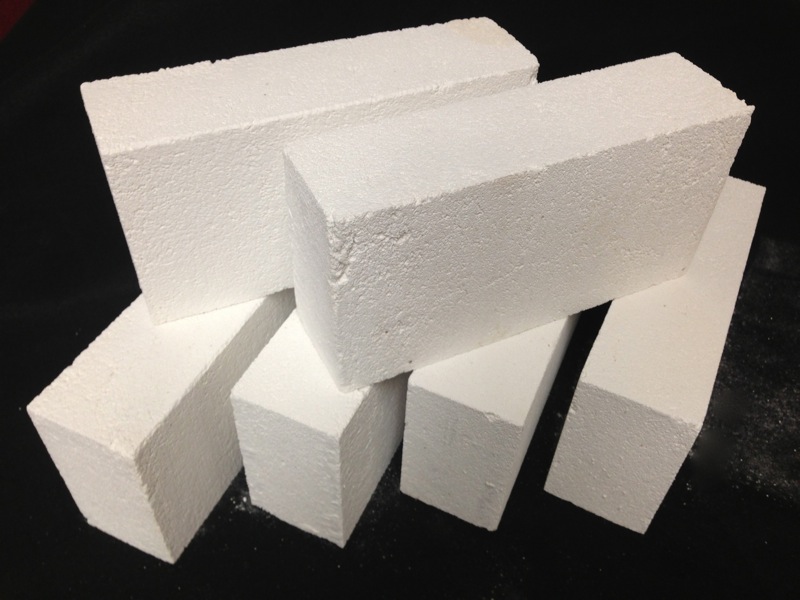
Refractories have multiple useful applications. In the metallurgy and ceramic industries, refractories are used for lining furnaces, kilns, reactors, and other vessels which hold and transport hot mediums such as metal and slag. Refractories have other high temperature applications such as fired heaters, hydrogen reformers, ammonia primary and secondary reformers, cracking furnaces, utility boilers, catalytic cracking units, air heaters, and sulfur furnaces.This article will review Insulating Firebricks (IFB), which are a type of thermal insulation bricks which are shaped refractory products with an application temperature of greater than around 1,000°C and a total porosity greater than 45 percent
Insulating FireBrick Strucrures :
The IFB is a relatively soft brick made of refractory ceramic material that can withstand high temperatures with low thermal conductivity. IFBs are generally light in weight and can be easily cut by handheld hack saw or any other hand tool such as a chisel or drill. They are ideal for creating custom shapes, curves, and cavities. However, due to the large apparent porosity, loose structure, low strength, as well as poor resistance to various types of erosion and wear resistance, They can only be used more in the heat insulation layer of kilns and other high-temperature thermal equipment. Generally, IFBs are not suitable for work lining and heavy load-bearing structures or environments with aggressive erosion and wear.
Types of Insulating Firebrick & Raw Materials.
The majority of commercially available IFBs are alumino-silicate refractory bricks, silicate bricks, or lightweight corundum (alumina) bricks. The chemical composition has a direct influence on the classification of the refractory bricks. In general, the higher the alumina content and the firing temperature of the insulating firebrick, the higher its classification temperature. The most common raw materials used for IFB include clay, kaolin, kyanite, mullite, (light) chamotte, sillimanite or andalusite.
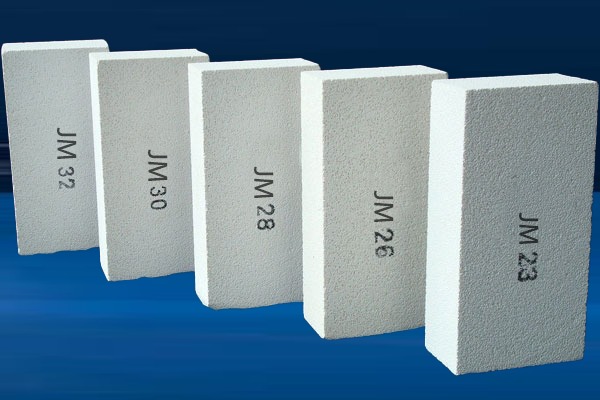
Factors affecting the thermal conductivity of insulation bricks
The thermal conductivity is influenced by the ingredients as well as the total porosity, pore shape, and pore size distribution. The porosity is produced by burnout materials and water. Common burnout materials include sawdust, straw, styrene bubbles, coke, or cellulose. In addition, foam or foaming agent can be added to increase porosity.
Insulating Firebrick Porosity:
Soap or saponins are used as foams, while metal or carbide powders are used as foaming agents in the casting processes. Lightweight bricks with high porosity can be produced this way.
Methods of Producing Insulating FireBrick
Raw materials and burnout materials are optionally mixed dry and/or mixed with water. The amount of water depends on the shaping process. Different suppliers manufacture IFBs by different techniques including casting, slingering, extrusion, or dry pressing. These different techniques can result in a variety of properties and insulation qualities.
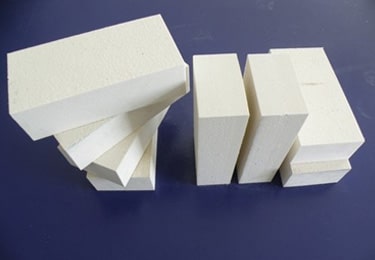
Casting process for Insulating Firbrick production:
For the casting process, bricks are direct cast into large molds often made of plaster, with vibratory aids to assist flow. Water-binding raw materials extract or gel water from the slurry and support the setting of the green body. The gelling process can be accelerated by adding gypsum or cement to the mix. Due to the high water content, the drying of the green cast compacts can take a correspondingly long time. Casting is used for larger or more specialty shapes of lower to moderate volume.
Slingering Process :
The “slingering” process is a continuous process in which the masses are slingered in large molds or on a conveyor belt. The slinger process is a form of low-pressure extrusion of a wet clay mix containing high levels of burnout additives with the additional processing step that the semi-extruded material gets slung onto a continuous belt to generate additional porosity before drying and firing. Insulating firebricks of medium density can be produced this way.
The Extrusion Process to Produce Insulating Firbrick
The extrusion process forces a damp clay mixture containing burnout additives through an extrusion nozzle, where the extrudate is subsequently cut into bricks, dried, and fired. Dry pressing is usually done uniaxially. The pressing method is suitable for the production of bricks with a higher density, so is more often used for high-density bricks.
Comparative table of insulation bricks :
The shaping process and the porosity agents cause typical porous structures of the insulating firebricks. This leads to a wide variety of thermal conductivities within the same class of product, which in turn leads to some variation in the ability of the different types of IFBs to control energy loss from the kiln. (Table 1)
Dry Pressing/Cement | Extrusion | Slinger | Cast | Unit | Manufacturing Process Class 23 IFBS |
|---|---|---|---|---|---|
| 520 | 569 | 611 | 483 | Kg/m3 | Density |
| 33 | 36 | 38 | 30 | lb/ft3 | ASTM C-155 |
| 1.2 | 0.9 | 0.7 | 1 | MPa | Modules of Rupture (MOR) |
| 174 | 131 | 102 | 145 | lb/in2 | ASTM C-93 |
| 2.0 | 1.1 | 0.9 | 1.2 | Mpa | Cold Crushing Strength(CCS) |
| 290 | 160 | 131 | 174 | lb/in2 | ASTM C-93 |
able 1: The average physical properties of four commercially available class-23 IFBs, representing the main manufacturing processes used by manufacturers.
In the IFBs, low density goes along with low strength. The cold compressive strength is specified as a characteristic value. The “hot” properties of the material must be good enough to support walls and arches at the desired application temperature. Hot bending strength or creep under load are characteristic values for the use at high temperatures.