


WHAT IS MICA?
Mica is a group of silicate minerals with unique properties. For hundreds of years, various types of mica have been used as both a thermal and electrical insulator. Certain types of mica are also added to cosmetic products, paint and printmaking materials, due to their natural sheen.
The two most common types of mica which are used commercially in insulation, and which we’ll focus on here, are muscovite and phlogopite. Muscovite mica is a hydrated phyllosilicate mineral of aluminium and potassium. The formula for muscovite mica is: KAl2(AlSi3O10)(F,OH)2, The formula for phlogopite mica is: KMg3(AlSi3O10)(F,OH)2 As you can see, the formula for phlogopite mica is very similar to that of muscovite with the exception of some aluminum molecules, which are replaced by magnesium.The main difference between the two types of mica is that muscovite is colourless, while phlogopite has a brown, yellow or green tint. Phlogopite can also be slightly harder than muscovite
INDUSTRY USE CASES
Due to its flexibility, durability and superior
performance as an electrical and thermal insulator,
mica is used in a variety of industries and
applications which work with high temperatures
and high voltages.
Foundry and steel In the foundry and steel industry, the most common requirement and use of mica-based insulation solutions is in furnaces. Ostensibly, furnaces and foundries operate at extreme temperature levels, making mica-based laminate composites which can withstand temperatures of up to 1600 Degrees C an ideal solution.
PROPERTIES OF MICA
Mica has unique mineral qualities and properties that have led to it become a popular choice for insulation solutions.
Dielectric capability Mica is dielectric, meaning it is a poor conductor of electricity, making it an ideal choice for electrical insulation. Muscovite mica has a dielectric strength of 2000V per mm, and phlogopite has a dielectric strength of 1500V per mm. Muscovite is commonly used in the electrical industry in capacitors for high frequency and radio frequency.
Thermal resistance and noncombustibility Mica is non-combustible, meaning that it is very useful in slowing down the effects of electrical fires, and particularly as a thermal insulator. In its basic state, phlogopite mica can withstand temperatures of up to 1000 Degrees C. Our high performance microporous mica-based insulation material uses small particles of
dispersed silica to minimise heat transfer and can withstand temperatures of up to 1600 Degrees C. Mica maintains its superior dielectric capabilities and mechanical properties at extremely high temperatures, making it an ideal choice for not only thermal insulation applications but electrical ones too.
Flexibility As we’ve discussed, mica has perfect basal cleavage, as well as sectile and elastic tenacity – this means that it is very easy to manipulate and cut, stamp and punch into various shapes and sizes. Its formation in extremely thin sheets also means it is lightweight. Mica insulation products are therefore easy to transport, store, install and maintain.
Continuous process
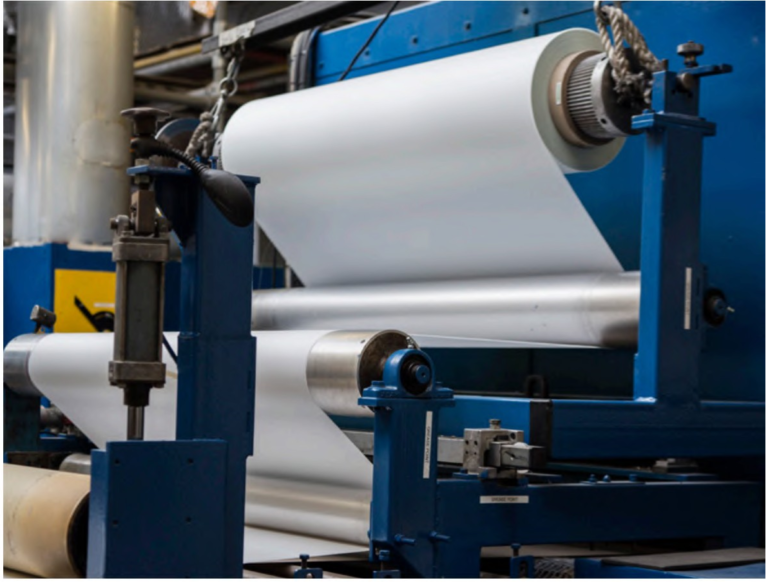
manufacturing Consistency is of the utmost importance in continuous process manufacturing – but safety must also be the number one priority. Particularly in industries such as petrochemical, glass and cement, high temperature insulation solutions are essential in providing vital safety measures. Common applications of mica insulation in continuous process manufacturing include:
• Pipe and tube insulation – giving additionalsupport and providing essential temperature regulation for petrochemical production.
• Kiln insulation – providing thermal protection for glass and cement kilns.
• Valve insulation – providing protection for essential control values in continuous process manufacturing.
Electrical and electronic
As a highly dielectric material, mica is ideal for use in industries that work with high voltages. Mica tubes are often used as capacitors and resistors, and mica is used for various components within electrical motors and instruments. Mica capacitors provide stability and reliability to an electrical circuit, and work very well in high frequency settings. They are well suited for high power broadcast transmitters, defence electronics, and various types of circuits, including time-constant and coupling circuits. Mica resistors are ideal for high power and high-speed applications, because of mica’s natural thermal resistance and ability to withstand incredibly high temperatures. In terms of electrical applications, mica insulation solutions are commonly used in the following industries and applications:
• Automotive and e-mobility –as the demand for electric vehicles grows, so does the need for more innovative solutions to ensure the utmost safety when it comes to more powerful car batteries. Mica is being used in flame retardant batteries, battery thermal management solutions, and to create thermal runaway barriers.
• Grid storage – mica rolls are often used as capacitors in large-scale grid systems to store high voltages of electricity
Most commonly, mica is combined with the following materials to create optimised high temperature insulation:
• Silicon – low thermal conductivity, flexible, low toxicity.
• Polyurethane – often used in rigid foam form. Hard and durable, high tensile strength and excellent thermal resistance.
• Epoxy resin – good strength, low absorption of moisture, versatile, can withstand high temperatures with the correct additives (e.g. mica).
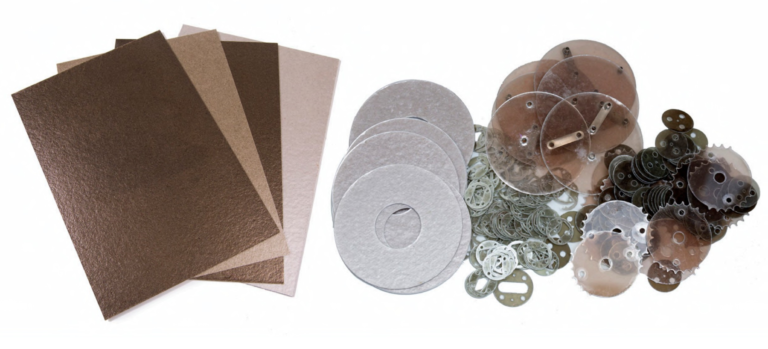
Mica composites and laminates As we’ve discussed previously in this whitepaper, mica has superior properties when it comes to thermal resistance and dielectric capabilities. But its usefulness and effectiveness can be greatly improved and increased when it is combined with other insulative materials. As mica natural occurs in extremely thin sheets, and is incredibly flexible, it can be easily incorporated into laminates, or ground and bound with other materials to create highly effective insulation solutions.