


Silicon Carbide refractory plates
Silicon carbide products are high-quality refractory materials with the advantages of fine thermal conductivity, high thermal shock stability, high load capacity softening point and very good wear-resisting performance. Silicon carbide (SiC) ceramic kiln furniture, pillars, supports mainly used for sanitary ceramics, hobby ceramics, construction ceramics, electronic ceramics, high-voltage porcelain, grinding wheels and many other similar applications.
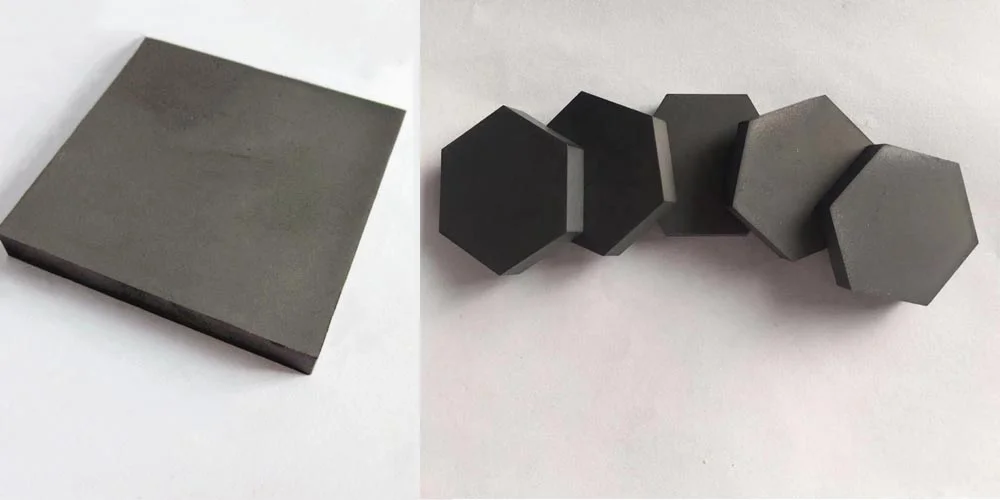
sic based kiln furniture sort in following types :
- Oxide bonded silicon carbide
- Nitride bonded silicon carbide
SiC plate applications
The kiln furnitures component are used in sanitaryware and porcelain production heat processing, to carry various part and ceramic Items. Which must therefore have acceptable mechanical strength. they must also ensure that the parts do not deform or stick to each other.
SiC produce Process
SiC is produced synthetically in electrical resistance furnaces, using the Acheson process invented in 1891.
SiC Properties
Silicon carbide (SiC) is a highly stable and very hard abrasive with excellent thermal shock resistance. Harder even than aluminum oxide, silicon carbide is the hardest common abrasive grain, measuring 9.5 on the Mohs scale of hardness, very close to that of diamond. As a blasting media, it has a very fast cutting speed, also benefiting from a high degree of recyclability. Its long-lasting nature means it is well suited for use on harder materials, rougher surfaces and for wet polishing, due to its friability, hardness and sharpness. It is ideal for hard metals, glass, stones, and marble.